If you have the opportunity to see
Nickel Boys — we implore you to GO! The film is at the top of most critics lists for the
best feature of the year and for good reason.

Source: Courtesy / Amazon MGM Studios
Director RaMell Ross brings his innovative vision to
Colson Whitehead’s Pulitzer Prize-winning novel
The Nickel Boys, resulting in a haunting adaptation that intertwines American history, artistry and humanity. In a
recent conversation with Global Grind Sr. Content Director Janeé Bolden, Ross discussed his creative approach, the philosophical underpinnings of the film and the power of storytelling to bring erased histories back into focus.
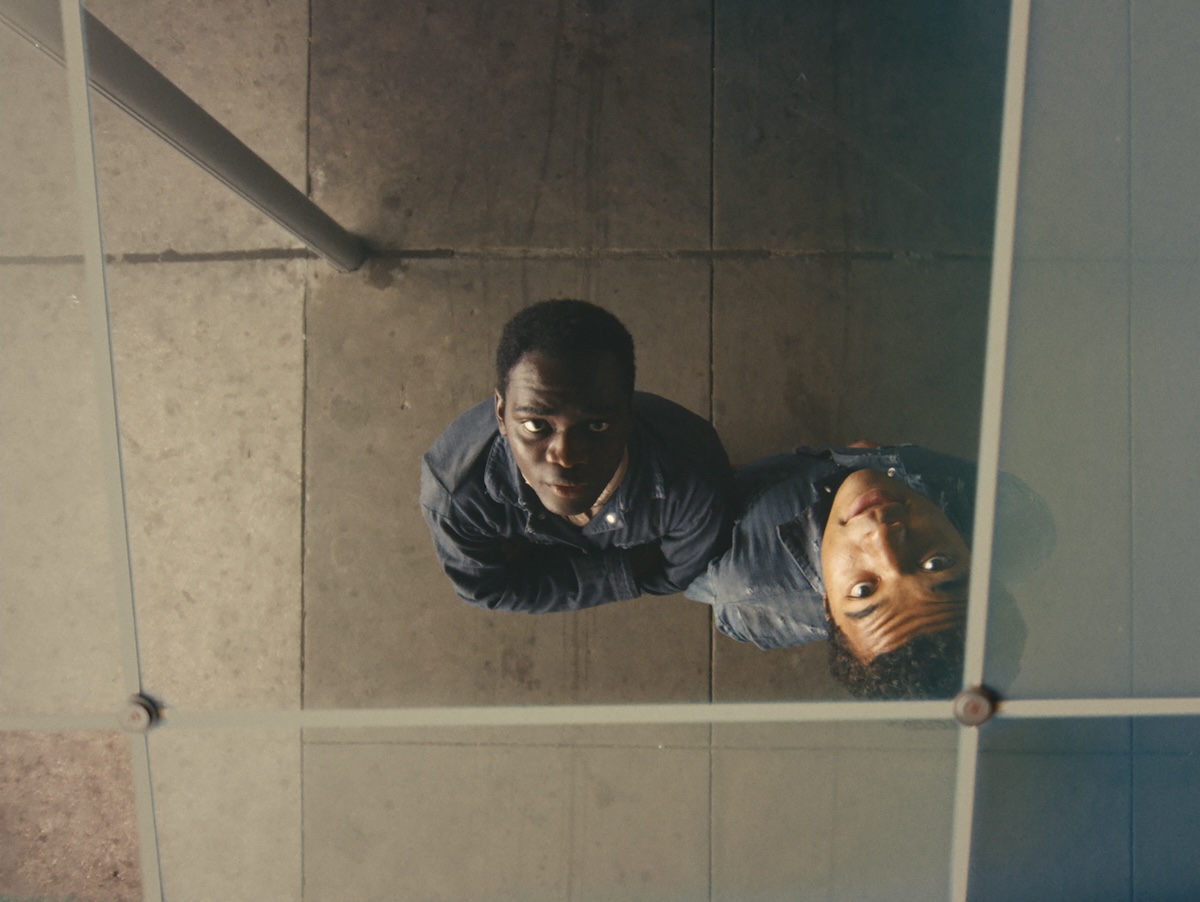
Much of the film is shot from one of the two main characters POV resulting in a striking visual story that is unlike anything we’ve seen in a feature before. That makes sense considering Ross approaches filmmaking with a unique lens, one that refuses to see rigid boundaries between reality and imagination.
Love Global Grind? Get more! Join the Global Grind Newsletter
We care about your data. See our privacy policy.
“Coming from a documentary background and the way in which I think about art and cinema, I don’t draw hard distinctions between fiction and nonfiction,” Ross shared with
GlobalGrind. “Fantasy, not fantasy. You know, I think the world outside is pretty fantastical and pretty fiction. You know, I mean blackness is a fiction that’s a real fiction. You know, all of these relatively philosophical concepts that have practical consequences. And they’re just generally confusing if you really start to think about them.”
When asked why he chose POV for
Nickel Boys, Ross’ response is simple.
“Why POV? Why not,” he said, pushing back candidly. “When POV came to mind, it was the first thing I imagined. I couldn’t imagine shooting it another way.”
“I was introduced to the book about two months or so before it came out and it was in the context of adaptation,” Ross continued. “After I finished it, I’m thinking, ‘I wonder what the world was like from their perspectives?’
Hale County This Morning, This Evening [Ross’ award-winning 2018 documentary] is POV without my arm, my hands being in it. It just kind of makes sense. It’s funny for things that are first thoughts and no brainers to be a strange choice to others, you know?”
Source: Courtesy / Orion Pictures
The story, which centers on the Nickel Academy, a boys reform school where Nickel Boys’ central character Elwood lands after being wrongly accused of car theft. Grounded in the real-life horrors that occurred at the Dozier School for Boys in Marianna, Fl, which inspired Whitehead’s novel, Ross was drawn to the Dozier archival materials, forensic documents from the University of Southern Florida, which unearthed the school’s dark past.
When asked if his work seeks to achieve justice for the boys of the Dozier School, Ross was reflective.
“I think that justice in a traditional sense means attempting to make whole or to somehow amend or somehow acknowledge. I don’t think anyone’s gotten any money. I don’t think anyone’s made commitments to… provide them with what they need.”
Instead, Ross spoke about what he calls “visual justice.” He described it as an effort to reclaim stories that have been confined to the shadows of history.
“Rescuing people from the archive, taking them out of these chambers of statistical and repressive blackness and reorganizing it… That’s what I think is visual justice,” Ross explained.
Ross’s adaptation of
The Nickel Boys is rich with symbolism, but it’s all drawn from the real lives of the boys at Dozier. He pointed out that marbles and coins were among the artifacts found in the boys’ pockets. “The marble is something that was actually found in the pocket of some of the boys,” he noted. “So we wanted to bring that into the film.”
Similarly, the inclusion of alligators in the film has multiple meanings. Alligators are a real part of Florida life and there’s also a horrific history of Black babies and children being used for alligator bait, but the animal makes multiple appearances in
Nickel Boys for other reasons as well.
“The alligator, aside from it being a real-life thing… is a metaphor for systematic violence,” Ross explained. “You know, it’s sort of blind. I like to call it reptilian. Where it’s just like instinct is to eat you.”
Source: Courtesy / Orion Pictures
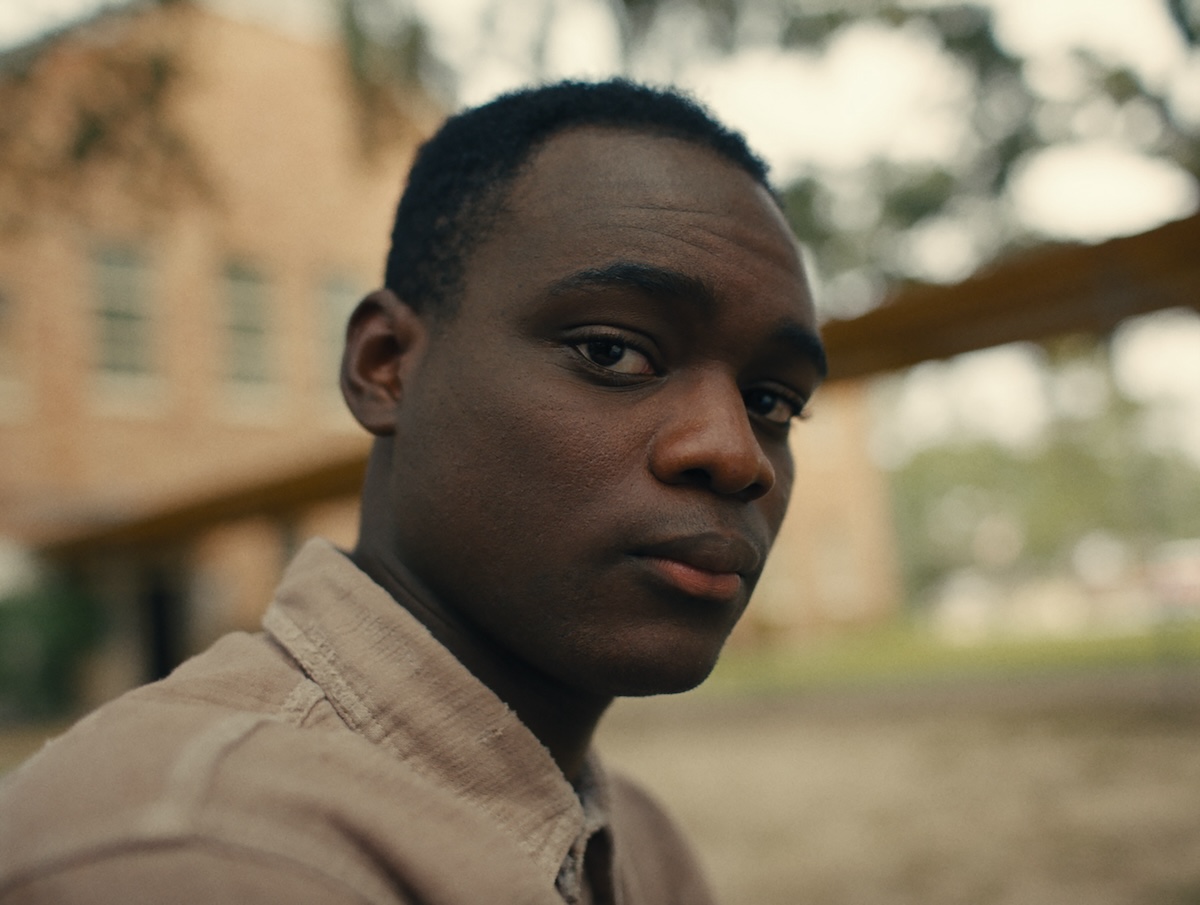
protagonist Elwood, portrayed by Ethan Herisse for most of the film [and Daveed Diggs later in the project] provides much of the film’s emotional core. Elwood’s perspective, his belief in fairness in particular, anchors the narrative.
Ross reflected on Elwood’s unshakable optimism, comparing it to that of Dr. Martin Luther King Jr. “Elwood’s optimism—it’s not naïve,” Ross said. “It’s a kind of stubborn belief in justice, much like Dr. King’s. That belief, even when it feels impossible, is infectious.”
Ross also highlighted the central role of love in the film, particularly through
Aunjanue Ellis’s portrayal of Elwood’s grandmother.
“The film is not the film without Aunjanue,” Ross stated. “I couldn’t imagine someone else transferring the love through the screen because normally the love is in the screen with the characters and you witness it… But you’re not complicit, nor are they looking at you with that love.”
Ellis’s performance brings a rare intimacy to the film, allowing viewers to feel directly connected to the characters’ emotions. “Love is the central organizing mechanism of
Nickel Boys. That’s what we distilled from [Whitehead’s novel] and wanted to reproduce in the film,” Ross told Global Grind.
With
Nickel Boys, RaMell Ross doesn’t just adapt a novel; he reshapes how we see and remember history. His work reminds us that visual justice is not just about representation—it’s about creating a space where the unseen can finally be acknowledged and honored.
Check out photos from this week’s special screening of
Nickel Boys in Los Angeles below.